
Getting to Grips with Georgia’s New Hands-Free Law
Since Georgia’s new hands-free cell phone laws came into force at the beginning of July, police have been mainly handing out warnings to the law-breakers. But watch out! Once they start issuing citations, fines and penalty points you could be putting your drivers’ license and auto insurance at risk.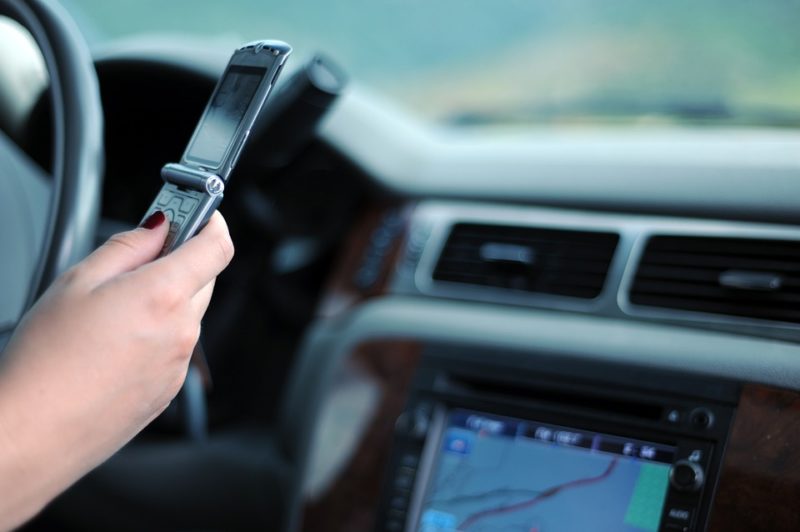
Although there’s been some confusion about some elements of the Hands-Free Georgia Act, the basic rule is that you can’t hold a phone or even have it touching any part of your body (like your lap), while you’re behind the
wheel.
That means even if your car is stopped, for instance in a gridlock, you still can’t hold your phone or have it touch you.
How Could I Still Talk on my Phone While Driving?
You can keep your phone within reach, say on the vehicle console, passenger seat or on a dash mount, and touch the screen to answer or make calls as long as those actual calls are conducted “hands-free” — meaning you use the phone’s built in speaker and microphone or a hands-free device like a Bluetooth headset or other equipment that may or may not be built into your car’s audio system.
But you can’t even do that if you have to unbuckle your seat belt to touch your phone.
Nor can you hit “Play” to launch your favorite music playlist or an online music service on your phone or iPod. The only way you can use these services is to start them up while you’re still parked — and that means properly parked, not stopped at a traffic signal or other intersection.
You’re also not allowed to record or watch videos, although a permanently running, dash-mounted camera is okay,
Nor, of course, can you text (banned since 2010) or read on your phone. However, you can use the screen for GPS navigation, although there’s currently some difference of opinion on whether you can actually key in a location while driving.
The Governor’s Office of Highway Safety says not. So, follow their advice — let’s face it, it’s safer!
Are There Any Exceptions?
Yes, you’re allowed to hold your phone to make an emergency call and you can touch it (without holding it) to key in a phone number or answer a call.
You can control your phone’s music app, such as adjusting volume or skipping tracks, via your car’s stereo system or steering wheel controls, if they’re able to do this.
You’re also allowed to wear a smart watch.
Other exceptions include use by utility workers on duty, first responders and school bus drivers using a two-way radio.
Another interesting aspect, according to the Atlanta Journal-Constitution, is that teens, who were previously forbidden to use wireless devices at all from behind the wheel, are now able to use hands-free devices.
Why Do We Need Texting and Driving Laws in Georgia?
Georgia is the 16th state in the union to pass a hands-free law.
The reason: Lives are being lost, many people injured and scores of cars are being smashed every week on Georgia’s roads because drivers have been distracted. And the most common cause of distraction is driving while on the phone, especially among 16 to 25 year-olds.
Evidence from other states suggests hands-free laws have helped cut the number of auto accidents by an average 16 percent.
Even in Georgia, awareness of the new law before it actually started is said to have reduced traffic fatalities by 10 percent so far this year, according to the Journal-Constitution
What Are the Penalties?
Some new laws allow a grace period of 30 to 90 days before citations are issued, but not this one.
You might just get off with a warning but it’s increasingly likely that if you’re caught driving while on the phone, with your device in your hands, you’ll likely get a $50 ticket and one point on your driver’s license. The second time, it’s a $100 fine and two points.
After that, if you were crazy enough to be caught using the phone a third or subsequent time within a 24-month period, the fine is $150 plus three
points.
For a first offense, a driver may be excused if they turn up in court and show the judge a receipt for a hands-free device they just bought.
What To Do If You Want to Use Your Phone
If you need to hold your phone, say to text, post on Facebook or Twitter, make a call or select music, you must pull off the road and find a place to
park. It’s as simple as that.
What Happens to my Insurance if I’m Ticketed?
Your car insurance normally protects you if you cause a crash, even if you were distracted.
However, if you were using your phone, it’s possible you could be vulnerable to an additional lawsuit for what’s called “punitive damages”, which may not be covered by your insurance
If you were using your phone when you crashed or, if you get ticketed, you will almost certainly see your auto insurance premium increase by up to 20 percent.
Insurance companies do monitor license points and driving records every six months and take this into account when setting your rates. And auto insurance rates generally are already rising because of past increases in
accident rates.
However, different companies have different rules, so you should always speak to your agent if you’re concerned about your rate.
As ever, the auto insurance experts at Grimes Insurance are always happy to provide information on the scope and cost of your auto coverage.
Final Words
If you don’t break the law, you’re in the clear as far as your wallet and your license is concerned — and you’ll be playing your part in cutting
the risks on Georgia’s highways.
But not everyone agrees that our new mobile phone law 2018 is enough to make our roads safer.
Many road safety experts say that using a cell phone in any way is enough to distract your concentration on your driving. They want to see even
tougher restrictions on cell phone use by drivers.
As more cars enter our highways every day, accident risks grow. The more you do to avoid distractions, from whatever source, the safer you’ll be.
Disclaimer: This article is provided for information only and is not intended to constitute legal advice, for which you should always consult a legal professional. While we have done our best to ensure accuracy, Grimes Insurance does not accept responsibility
for any actions a person may take as a result of information in this article.